Design Policy in Poland: Building a More Connected Design Ecosystem
By Piotr Swiatek
Design Policy and International Projects Manager, PDR
Design plays an increasingly important role in economic development, innovation and public services. Drawing on discussions at the Design Power conference in Warsaw, Piotr Swiatek explores how stronger connections between policy, industry, education and research can help build more effective design ecosystems.
On 22 and 23 October 2026, I joined the international conference Design Power: Strategy. Identity. Protection. in Warsaw, organised by the Patent Office of the Republic of Poland in cooperation with the Ministry of Economic Development and Technology.
Given the organiser, I expected much of the programme to focus on intellectual property, legislation and the protection of industrial designs. These were naturally important themes, but what I found particularly interesting was how broadly design was understood across the two days: as a contributor to economic competitiveness, sustainability, public services, culture, education, identity and the quality of our everyday environment.
This wider framing was established early in the opening keynote by Aneta Stuleblak, Deputy President of the Polish Patent Office. Alongside the importance of protecting design, she spoke about design in a much broader sense: the design of interactions, experiences, connections and systems, as well as physical products. She also highlighted the importance of education, evidence and a more strategic approach to supporting design.
For me, this connected strongly with PDR's work on design policy and ecosystems. One of the recurring challenges in this field is that design cuts across many different areas of public policy. Its horizontal nature is a strength, but it can also make responsibility for supporting it fragmented.
Building the conditions for design
This was also the focus of a keynote by Christina Melander, Chief Design Officer at the Danish Design Center and former President of BEDA during my time on the BEDA Board.
Christina, author of the famous concept of the Danish Design Ladder, presented her new Danish Model of Design Promotion, which identifies five interconnected conditions supporting a wider and more strategic use of design: political recognition; intermediary institutions; programmes and instruments; design culture, talent and education; and data and evidence.
It was particularly interesting to see this model build on earlier work mapping the Danish design ecosystem, undertaken by PDR as part of a European collaboration with Danish partners several years ago.
The underlying message was a useful one: design capability does not develop through a single funding programme or institution. Different parts of the ecosystem need to reinforce one another over time.
Public support for design
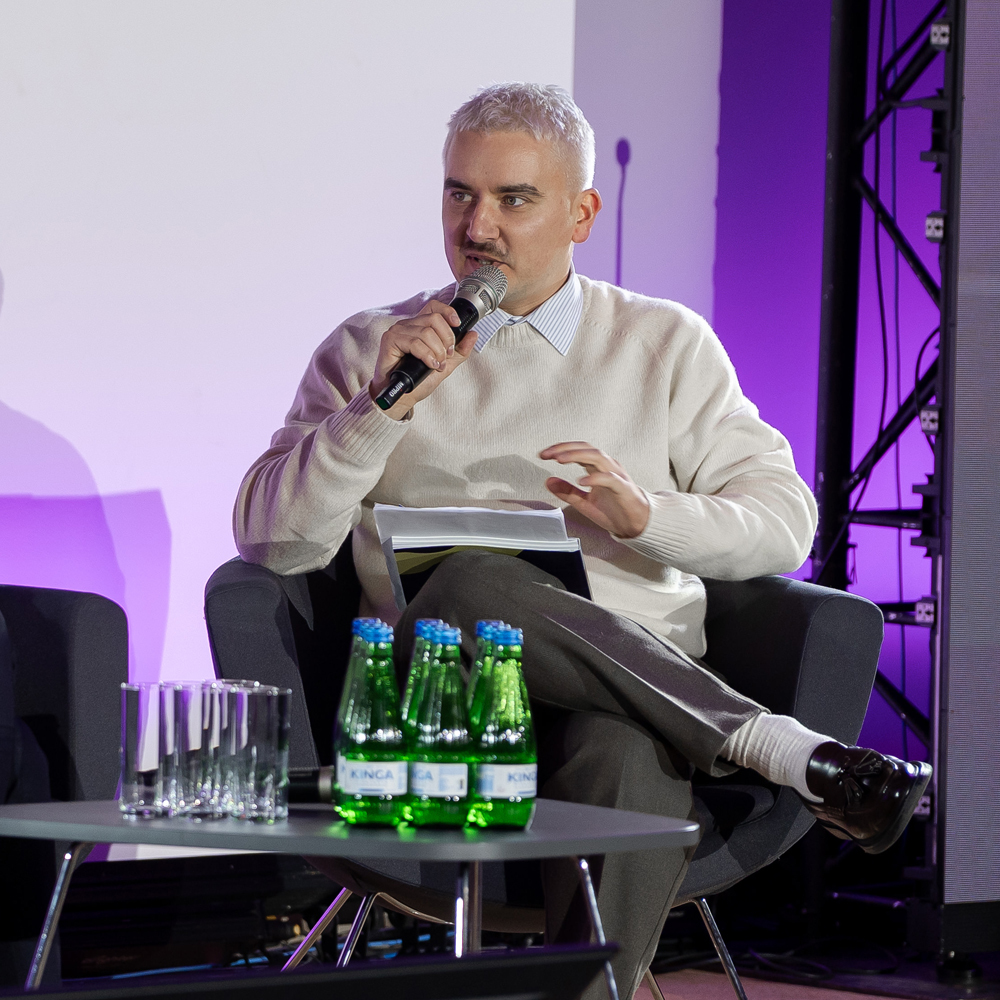
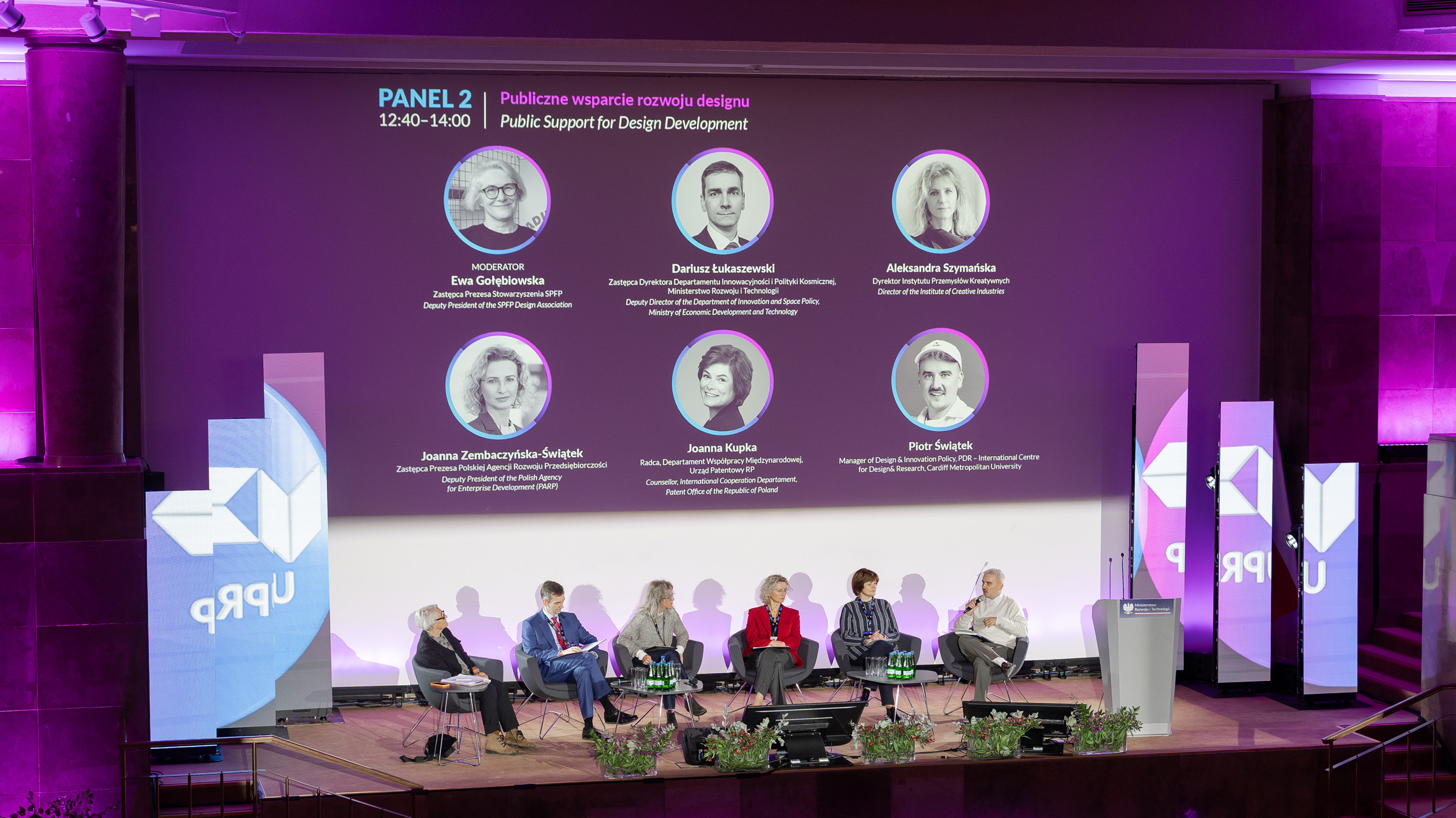
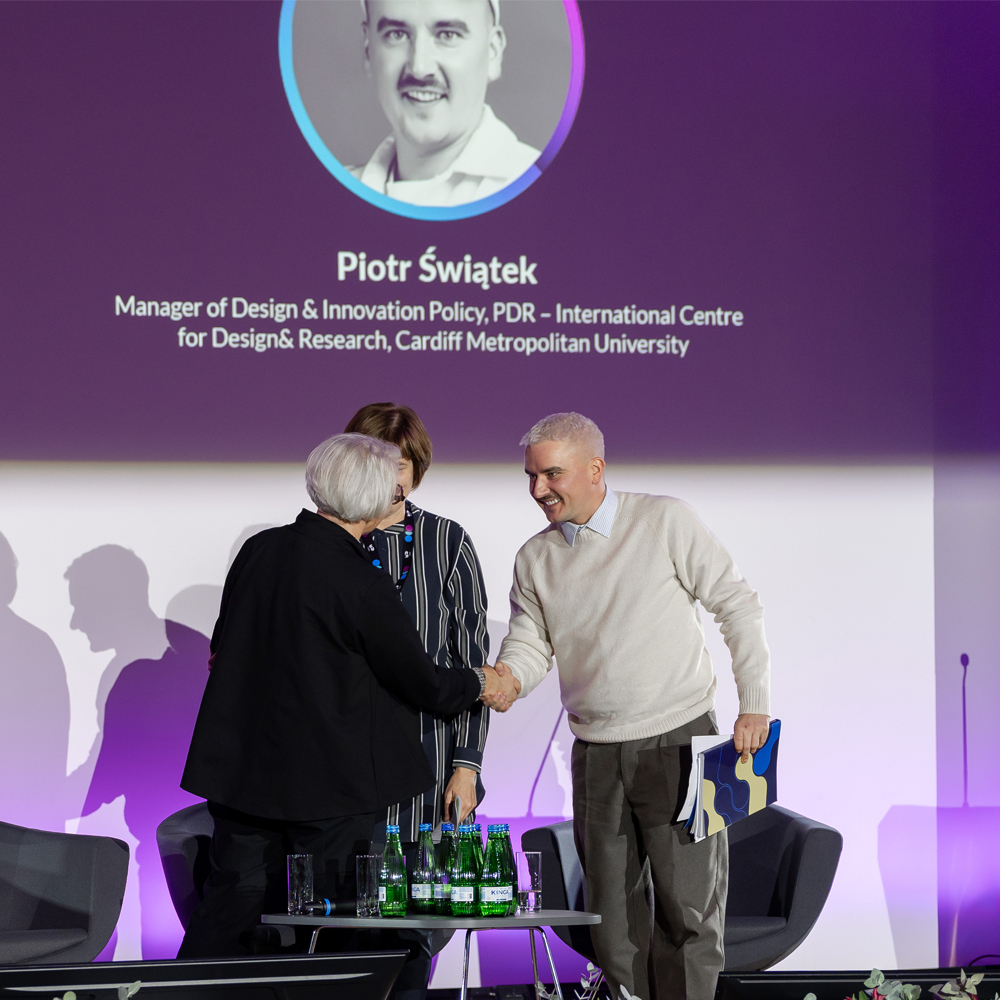
I joined a panel chaired by Ewa Gołębiowska from the Polish Designers Society on public support for the development of design, alongside representatives of the Ministry of Economic Development and Technology, the Institute of Creative Industries, the Polish Agency for Enterprise Development (PARP) and the Polish Patent Office.
The composition of the panel itself reflected something we identified in our recent mapping of design policy across Europe: design rarely belongs neatly within a single policy domain
The discussion covered business and innovation support, creative industries, intellectual property, education and the use of design methods by public institutions. Aleksandra Szymańska from the Institute of Creative Industries also highlighted the fragmented nature of the current landscape and the need to think in terms of an overall ecosystem rather than isolated interventions.
The Institute's recent Zaprojektować polski design report is therefore an important step. Rather than starting with a predetermined support programme, its work has combined sector research, data analysis and consultation with practitioners to better understand the structure, needs and gaps within the design ecosystem.
Beyond supporting design businesses
Another theme I brought to the panel was the importance of looking at both the supply and demand for design.
Public interventions often focus on encouraging companies to use design, for example through grants, vouchers or advisory programmes. These can be valuable, but increasing demand also raises questions about the available supply of skills.
If organisations are encouraged to make greater use of service design, strategic design or design research, for example, do sufficient capabilities exist within the market? Are these skills being developed through education? Is there a strong research base? And do organisations know how to commission and work effectively with designers?
The same applies to the public sector itself.
In the UK, design has increasingly become an internal capability within government. Service designers, interaction designers, content designers, user researchers and, increasingly, policy designers work within government departments and public bodies to shape services, systems and policies.
This suggests that public support for design can mean more than supporting design businesses. Government can also generate demand through procurement, build its own design capability and use design methods when developing policies and public services.
From fragmented activity to a more connected ecosystem
It was encouraging that several of these themes were echoed by other members of the panel.
PARP described not only its support programmes for SMEs but also its use of design-thinking approaches when developing programmes. The Patent Office outlined its work around intellectual property, SME support and education. Dariusz Łukaszewski from the Ministry of Economic Development and Technology also reflected on the continuing need to improve understanding of the breadth and value of design, the fragmentation of existing support and the potential to make greater use of design within the public sector and public procurement.
No single institution can address all of these issues.
But Poland already has many of the elements of a strong design ecosystem: active institutions, business support programmes, design education, research, a substantial professional community and growing recognition of design's economic and social value.
The challenge is how these elements connect.
This is also one of the central lessons from our European design policy mapping. Where design is relevant to many areas of policy, coordination becomes particularly important. That does not necessarily mean creating one large programme or assigning all responsibility to one institution. It means developing a clearer shared direction, understanding gaps in the ecosystem and ensuring that different interventions reinforce rather than duplicate one another.
The Warsaw discussions suggested there is considerable interest in doing exactly that.
For PDR, it was useful to see many of the questions we encounter through our European design policy work being discussed so openly in the Polish context, and to contribute some of the evidence, examples and approaches that have emerged from that work.